地质流体热力学模型
地球流体是指地球环境条件下的液体和气体, 主要成分包括水(H2O)、气体(如CO2、CH4、C2H6、N2、H2S、NH3、Cl2、F、HCl、N2O、 Ar、He等)、金属离子(如 Na+、K+、Ca2+、Mg2+、Fe2+、Fe3+等)、 阴离子(如Cl- 、SO42-、 HCO3- 、CO32- 、PO43-、HPO42-、CrO42-等)、各种阴离子和阳离子组成的络合离子(重要的络合离子达数百种)、天然有机分子和各种人工合成化肥、农药、化学用品分子等, 这些组分形成了一元、二元、三元和多元体系, 所以流体体系的种类繁多,但是常见的流体只包括几十种,其实,其它行星流体也包括在这个范围内。
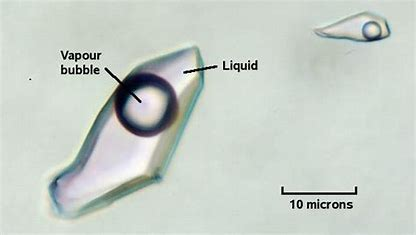
海水、湖水、卤水、地热液体、矿坑水、土壤水、污水、火山喷发气体、矿物液体包裹体、板块俯冲带脱水脱碳产生的流体、温室气体、石油、天然气、页岩气、气体水合物、成矿流体、变质流体等等也是地球流体。几乎所有的地球化学过程都离不开地球流体的参与。 定量计算流体的热力学性质(PVTx性质、密度、等容线、化学位、溶解度、相变、热容、热焓等)对于定量分析地球化学过程非常重要。
过去几十年来,我们针对多种地球流体体系,系统建立并发展了一系列状态方程和热力学模型。相关成果已被全球688所顶尖高校或科研机构的逾万名科学家,广泛应用于固碳、矿床形成、海洋科学、环境保护、资源勘查及生态演化等领域的理论与实验研究(详见:https://efs.idsse.ac.cn/module1/citation.html)。
本网站提供一个便捷的在线计算平台,用于高效计算多种热力学性质。平台所采用的地球流体热力学模型或状态方程均已在学术界获得广泛正面引用,并力求以最友好、直观的界面服务于广大科研工作者。该计算平台将持续更新与完善,未来将纳入更多类型的地球流体体系及热力学性质,以更好地满足科学研究需求。
我们正在编写《流体地球化学》一书, 参见目录。
Thermodynamic Models of Geological Fluids
Geological fluids refer to liquids and gases under Earth's environmental conditions. Their main components include water (H2O), gases (such as CO2, CH4, C2H6, N2, H2S, NH3, Cl2, F, HCl, N2O, Ar, He, etc.), metal ions (such as Na+, K+, Ca2+, Mg2+, Fe2+, Fe3+, etc.), anions (such as Cl-, SO42-, HCO3-, CO32-, PO43-, HPO42-, CrO42-, etc.), various complex ions composed of anions and cations (with important complex ions numbering in the hundreds), natural organic molecules, and various synthetic molecules from fertilizers, pesticides, and chemical products. These components form unary, binary, ternary, and multicomponent systems, resulting in a wide variety of fluid systems. However, common fluids only include a few dozen types。 Fluids from other planets also fall within this range.
Seawater, lake water, brine, geothermal fluids, mine water, soil water, sewage, volcanic gases, mineral fluid inclusions, fluids from dehydration and decarbonation in subduction zones, greenhouse gases, petroleum, natural gas, shale gas, gas hydrates, ore-forming fluids, and metamorphic fluids are all considered geological fluids. Almost all geochemical processes involve the participation of geological fluids. Quantitative calculation of the thermodynamic properties of fluids (PVTx properties, density, isochoric lines, chemical potential, solubility, phase transitions, heat capacity, enthalpy, etc.) is crucial for the quantitative analysis of geochemical processes.
Over the past several decades, we have systematically developed and refined a series of equations of state and thermodynamic models for various geofluid systems. Our work has been widely adopted by over 10,000 scientists from 688 leading universities and research institutions worldwide, and applied in both theoretical and experimental studies across fields such as carbon sequestration, ore deposit formation, marine sciences, environmental protection, resource exploration, and ecological evolution (for details, see: https://efs.idsse.ac.cn/module1/citation.html).
This website provides a user-friendly online computing platform for the efficient calculation of a wide range of thermodynamic properties. The geofluid thermodynamic models and equations of state employed on this platform have been extensively and positively cited in the academic literature, and we strive to offer researchers the most intuitive and accessible interface possible. The platform will be continually updated and improved, with plans to incorporate additional geofluid systems and thermodynamic properties in the future to better serve the needs of the scientific community.




 琼公网安备46020002000217号